PERM Labor Certification Process: What OPT Workers Need to Know
The first and most critical step in getting an employer-sponsored Green Card. Learn how the PERM process works, why it takes so long, and what your employer must do.
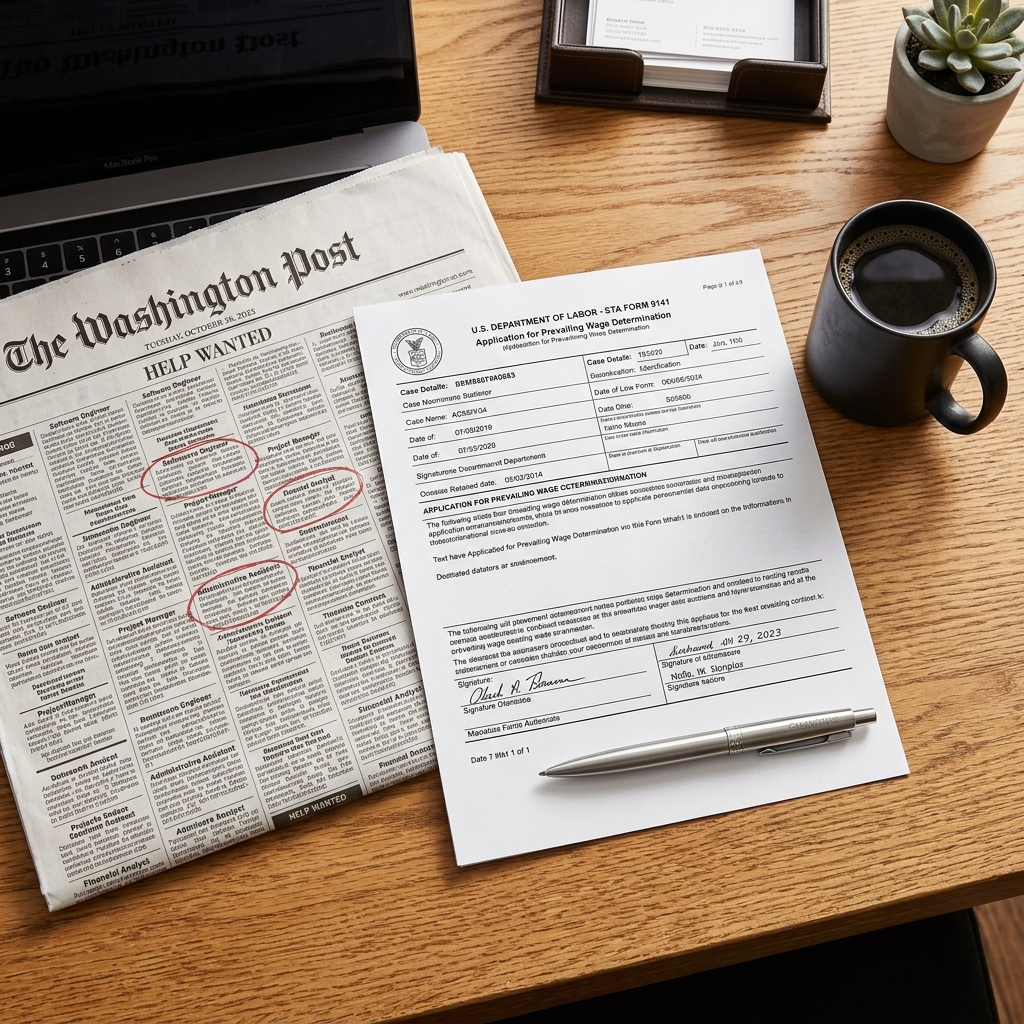
If your employer has agreed to sponsor you for an EB-2 or EB-3 Green Card while you are on OPT, STEM OPT, or H-1B, the very first hurdle you will face is not with USCIS, but with the Department of Labor (DOL). This hurdle is known as the PERM Labor Certification.
What is PERM?
PERM stands for Program Electronic Review Management. Before an employer can sponsor a foreign worker for a permanent green card, they must prove to the US government that there are no willing, able, and qualified US workers available for the position.
The 3 Stages of the PERM Process
The PERM process is entirely driven by your employer (and their immigration lawyers). As the employee, your main job is to provide your educational documents and experience verification. Here is what happens behind the scenes:
Prevailing Wage Determination (PWD)
Before advertising the job, your employer must submit a request to the DOL to determine the "Prevailing Wage" for your role in your specific geographic location. This ensures the employer isn't undercutting American wages by hiring you.
Recruitment and Advertising
Once the PWD is received, the employer must conduct a strict recruitment campaign to test the US labor market. They must place physical ads in the Sunday newspaper, post on state workforce agency job banks, and use other mandatory recruitment channels.
If a qualified US worker applies, the employer cannot file the PERM. They must wait and try again later.
Filing ETA Form 9089
If no qualified US workers apply, the employer officially files the PERM Labor Certification (ETA Form 9089) with the DOL. The date this form is filed becomes your incredibly important Priority Date.
Why OPT Students Must Start Early
As you can see from the timelines above, the complete PERM process currently takes over 20 months (nearly 2 years) from the day your employer agrees to sponsor you until the day the DOL approves the certification.
If you only have 3 years of total work authorization (1 year OPT + 2 years STEM OPT), you literally do not have enough time to complete the PERM process and file your Green Card application (I-140/I-485) before your student visa expires, unless your employer starts the process immediately upon hiring you.
The H-1B Bridge
Because PERM takes so long, 95% of employers will put you into the H-1B lottery while simultaneously starting the PERM process. The H-1B acts as a "bridge" visa, allowing you to stay in the US for up to 6 years while the lengthy Green Card process plays out. If you do not win the H-1B lottery, your OPT may expire before your PERM is approved.
Frequently Asked Questions
Can I pay for the PERM process myself?
Absolutely not. By law, the employer must pay 100% of all costs associated with the PERM Labor Certification, including lawyer fees and advertising costs. If you offer to pay, it is a violation of federal law and will result in a denial.
What happens if my employer does layoffs?
If your employer lays off US workers in your same occupation and geographic location within 6 months of filing your PERM, they must notify those laid-off workers and consider them for your position. Major tech layoffs severely delay or cancel pending PERM applications.
Manage Your OPT Timeline Carefully
The PERM process is a race against the clock of your expiring OPT. Use TrackMyOPT to map out your remaining STEM OPT days, calculate when your employer must file for H-1B, and track all your employment authorizations in one secure dashboard.